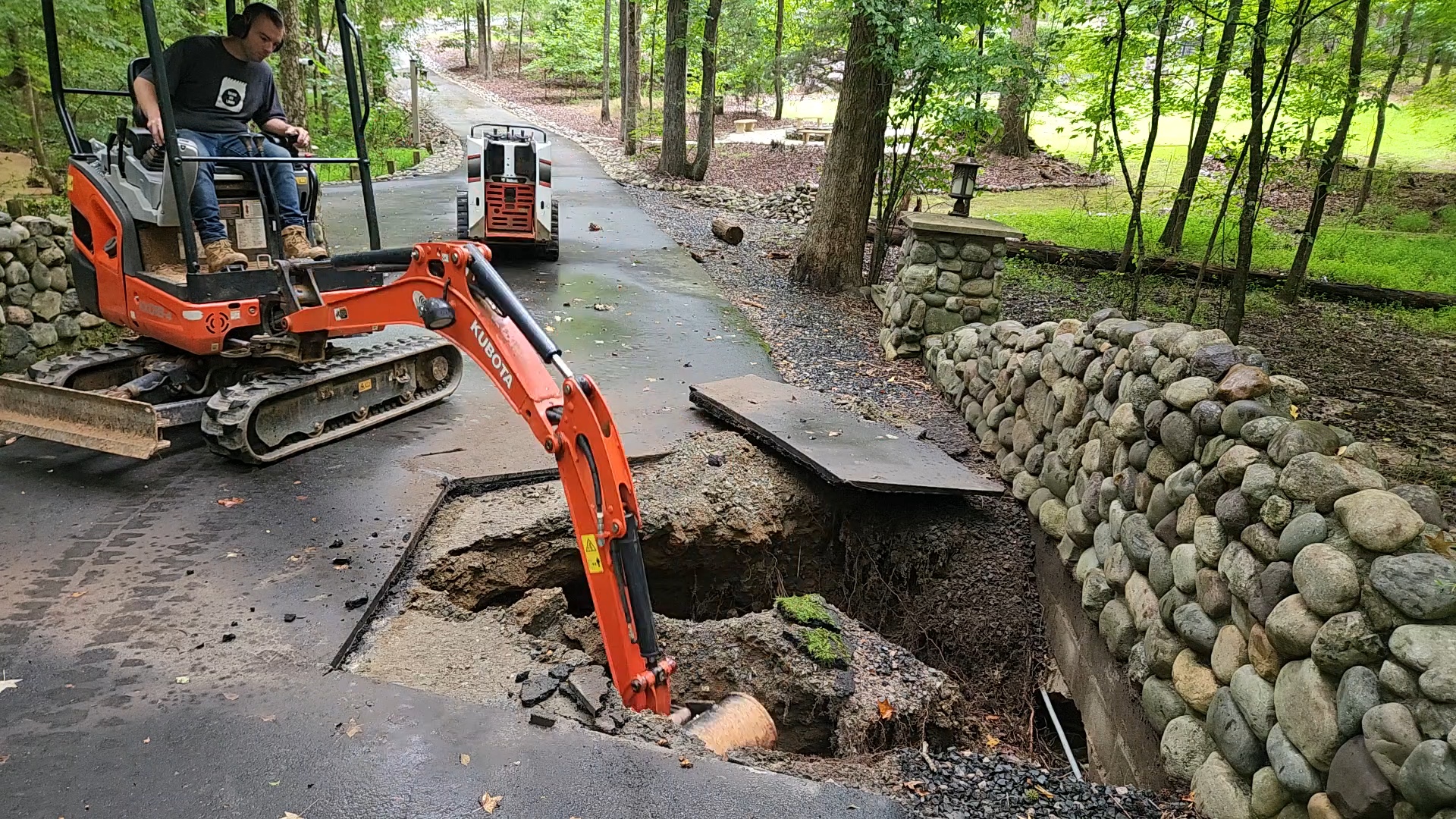
The key is not just where the puddle sits—it is where the water enters, how it crosses the property, and where it is supposed to leave.
SAFE FIRST STEPS
What you can do now
During or just after rain, photograph where runoff enters the driveway, where it crosses, and where it exits.
Check culvert openings and ditches from stable ground for leaves, stone, sediment, or collapsed material.
Mark soft shoulders, hidden washouts, deep ruts, and undermined edges so vehicles avoid them.
Look uphill for redirected water from roads, neighboring land, roof drains, or changed grading.
Check whether runoff is moving toward the house, septic field, well area, retaining wall, or neighboring property.
Measure approximate culvert size and damaged length so a contractor can understand the scale before arriving.
A note on safety
These are general property care suggestions, not a substitute for licensed or emergency service. If there is an immediate risk to people, the building, or utility lines, contact the appropriate emergency service first.